
How Nitric Boost Works: Mechanism Without the Hype
The two nitric-oxide pathways the formula targets, what blood-flow biology actually supports, and where the vendor's cGMP narrative exceeds the evidence.
On this page
Nitric Oxide in 90 Seconds
Nitric oxide (NO) is a short-lived gas your vessel walls produce constantly. It signals surrounding smooth muscle to relax, widening vessels (vasodilation), improving blood flow, oxygen delivery, and nutrient exchange. NO availability tends to decline with age, poor diet, inactivity, smoking, and some health conditions — which is why "supporting NO levels" is a coherent nutritional goal, and why diet (leafy greens, beets), exercise, and sleep are first-line strategies with broader evidence than any powder. Deeper explainer →
Pathway 1: Arginine–Citrulline (Enzymatic)
The enzyme nitric oxide synthase converts L-arginine into NO plus citrulline; citrulline then recycles back into arginine, sustaining the cycle. Supplementing both — as Nitric Boost does — mirrors standard sports-nutrition practice, because citrulline raises arginine availability more reliably than arginine alone (much oral arginine is metabolized before reaching circulation). This is the formula's best-grounded mechanism. Caveat: research typically uses multi-gram daily doses; this product's amounts are undisclosed.
Pathway 2: Nitrate–Nitrite–NO (Dietary)
Dietary nitrates from beetroot are concentrated in saliva, converted by oral bacteria to nitrite, then to NO in blood and tissue — a backup route that matters most when enzymatic production falters. Beetroot studies typically standardize nitrate content and run days to weeks. Practical footnote from the literature: antibacterial mouthwash can blunt this pathway (it kills the converting bacteria) — a small, evidence-adjacent tip for nitrate users generally. Pathway comparison →
The cGMP / PDE5 Story: Vendor Narrative vs Evidence
The vendor frames declining cGMP (cyclic guanosine monophosphate) — a messenger downstream of NO that drives smooth-muscle relaxation — as the "real" cause of performance issues, with the PDE5 enzyme as the villain that destroys it. Prescription PDE5 inhibitors (sildenafil-type drugs) block that enzyme; the vendor positions horny goat weed's icariin as botanical support in the same conceptual neighborhood.
What a Realistic Timeline Looks Like
| Window | What could plausibly happen | What to actually track |
|---|---|---|
| Days 1–7 | Routine/hydration effects; possible niacin flush | Tolerance, taste, habit fit |
| Weeks 2–4 | Subjective workout pump/energy impressions (highly variable) | Training notes, sleep, consistency |
| Months 2–3 | Any sustained subjective pattern worth judging | Decide: keep, or use the guarantee |
The vendor suggests 3–6 months of consistent use. Our addition: judge by tracked, specific markers (workout logs, not vibes) — and remember the guarantee window is 60 days, so set a calendar reminder to decide.
FAQs
No. Prescription PDE5 inhibitors have proven pharmacology at defined doses; this is a nutritional powder with undisclosed doses and no product-level trials. Do not substitute it for prescribed treatment.
There is no verified onset time. Nitrate/amino-acid research typically measures effects over days–weeks of consistent intake, not single servings.
References
- Lundberg & Weitzberg — nitrate–nitrite–NO pathway (PubMed 18167491).
- NIH Office of Dietary Supplements — fact sheets incl. Niacin.
- PMC8109295 — NO in erectile dysfunction (mechanistic review).
- PubMed 15229623 — NO–cGMP pathway in cavernosal physiology.
Visual: The Two NO Pathways
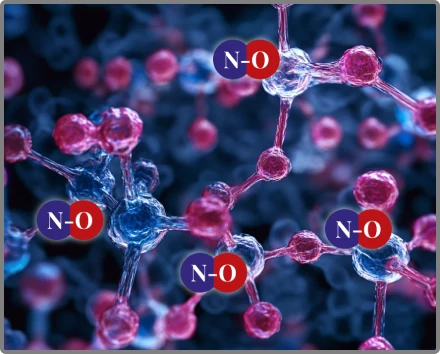
Think of it as two factories supplying the same molecule: the enzymatic factory (arginine/citrulline, needs healthy endothelium) and the dietary factory (beetroot nitrates, needs vegetables + oral bacteria). Aging degrades the first; modern diets starve the second. Formulas covering both are hedging correctly.
Visual: Where cGMP Fits
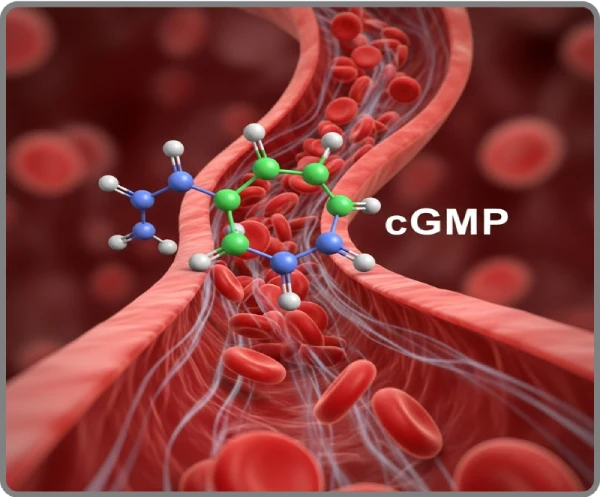
NO is the signal; cGMP is the intracellular relay that executes vessel relaxation; PDE5 is the off-switch. Prescriptions jam the off-switch with proven force. Botanicals like icariin are hypothesized to nudge the same system — a hypothesis is not a mechanism of action, and marketing that blurs the two deserves your skepticism, not your trust.
Why Placebo and Routine Effects Deserve Honest Mention
Any daily ritual — a morning scoop, a glass of water, attention to one's health — produces real subjective effects through expectancy, hydration, habit-stacking, and observation bias (you notice energy because you're tracking energy). Add concurrent changes buyers often make (more exercise, better diet, hopeful mindset) and attribution becomes genuinely hard. This doesn't mean "it's all placebo" — the nitrate/amino pathways are pharmacologically real — but it means honest evaluation requires tracked specifics over weeks, not global impressions after three scoops. Our decision protocol is designed around exactly this discipline.
Drug Interactions With the Cascade (Context, Not Advice)
Nitrates, PDE5 inhibitors, antihypertensives, and NO-donor drugs all traffic in this same cascade — which is why the safety page stresses clinician review for medicated buyers. Supplements don't need prescription potency to merit prescription-grade caution when they touch the same physiology; overlapping mechanisms are precisely where additive effects hide.
Related Reading
Written by NitricBooist Editorial Team · Last updated: · Editorial policy · Evidence policy